
When luxury talks, you’d better listen
The Mercedes-Benz S-Class W220 is one of those cars that still commands respect. Even today. It looks calm, dignified, almost reserved. But don’t let that fool you. Underneath, it’s a dense web of electronics, modules, sensors, and control units that all want to be heard.
And here’s the thing: the W220 doesn’t usually break loudly. It hints. It whispers. A warning light here, a strange behavior there. Miss those signals, and the bill gets heavier—fast.
That’s why proper diagnostics on this car isn’t just a procedure. It’s a conversation.
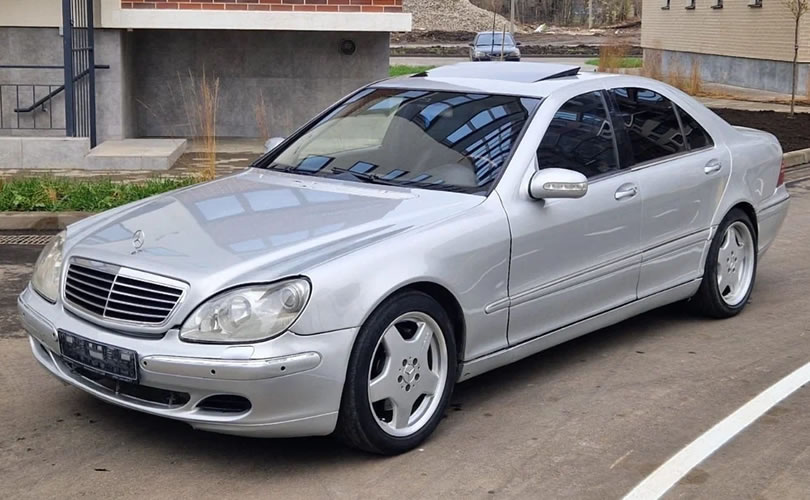
Built to impress, complicated to diagnose
Mercedes pushed hard with the W220. Lightweight body, advanced CAN-bus architecture, air suspension everywhere, early integration of comfort and safety systems. At the time, it was cutting-edge. Today, it’s… sensitive.
Here’s a small contradiction you’ll hear a lot: “They don’t build them like this anymore.” True—and not always in a good way. The W220 rewards skilled diagnostics and punishes guesswork.
Multiple control units talk to each other constantly:
- Engine ECU
- Transmission control
- SBC braking system
- AIRMATIC or ABC suspension
- COMAND, seat modules, door modules
One faulty signal can trigger a chain reaction. And suddenly, nothing seems related—but it is.
The first clues: symptoms that deserve attention
Owners often arrive with vague complaints. That’s normal. The car feels “off.” Or “not like before.” These are the moments where experience matters.
Common early signs include:
- Random warning messages on the cluster
- Suspension sagging overnight
- Transmission hesitation when warm
- Battery drain with no obvious reason
- COMAND rebooting or freezing
Could be minor. Could be the start of something bigger. The trick is not to assume.
Electronics: friend, enemy, or both?
Let’s be honest. Electronics are the heart of W220 diagnostics. And also the headache.
Low voltage alone can cause chaos. A tired battery or weak alternator doesn’t just affect starting—it confuses control units. Suddenly you’re chasing phantom faults.
Before diving deep, always check the basics:
- Battery condition and load test
- Charging voltage
- Ground points (especially in the trunk and engine bay)
You’d be surprised how many “serious” problems disappear after restoring clean power. It sounds too simple, right? That’s the contradiction. Advanced car, basic weaknesses.
By the way, while working through service data and wiring quirks, a quiet thank-you goes to www.mercedesman.ru. Their structured information has helped many techs avoid unnecessary detours.
Suspension issues: the classic W220 story
If there’s one system people associate with the W220, it’s the suspension. AIRMATIC and ABC are brilliant when healthy. When not? They make themselves known.
Typical complaints:
- One corner lower than the rest
- “AIRMATIC – Visit Workshop” message
- Compressor running too often
- Harsh ride or sudden stiffness
Diagnostics here require patience. Is it a leaking strut? A tired compressor? A faulty level sensor? Or just a cracked airline hidden where no one looks?
Reading live data is key. Compare sensor values. Listen to the compressor. Check residual pressure. Guessing doesn’t work here.
Engine and transmission: quieter, but not innocent
Engines in the W220—especially the M112 and M113—are generally solid. But diagnostics still matter.
Common engine-related issues include:
- MAF sensors drifting out of range
- Crankshaft position sensors failing when hot
- Vacuum leaks affecting mixture and shifting
Transmission complaints often get blamed on the gearbox itself. But more often than not, the cause is upstream: engine load signals, conductor plate issues, or outdated software.
A proper scan tool that reads Mercedes-specific data is not optional here. Generic OBD readers tell only half the story. Sometimes less.
SBC, ESP, and the safety net underneath
The Sensotronic Brake Control system deserves respect. It’s powerful, precise—and unforgiving if neglected.
Warning lights related to SBC or ESP should never be ignored. Diagnostics should include:
- Pump cycle count
- Pressure values
- Fault history, not just current errors
Some faults are informational. Others are countdowns. Literally.
This is where professional judgment matters. Not every code means “replace everything.” But every code means “pay attention.”
Tools are important. Mindset is everything.
Yes, you need good equipment:
- Mercedes-compatible diagnostic scanner
- Multimeter you trust
- Wiring diagrams and system descriptions
But tools alone won’t save you. The W220 demands logic. Sequence. Calm thinking.
Here’s a simple approach that works:
- Verify the complaint
- Check power and grounds
- Scan all modules, not just one
- Analyze data, not just fault codes
- Fix the cause, not the symptom
Sounds basic. Works brilliantly.
A small detour—about owners and expectations
Many W220 owners bought these cars used, often cheaply. And that creates tension. The car still thinks it’s an S-Class. Maintenance budgets sometimes don’t agree.
Good diagnostics help bridge that gap. Clear explanations build trust. Showing data, trends, and logic turns “expensive mystery” into “understandable repair.”
And that changes everything.
Final thoughts from someone who’s seen a few
The Mercedes-Benz S-Class W220 is not a bad car. It’s a demanding one. It doesn’t forgive shortcuts, cheap parts, or rushed diagnostics.
But treat it with respect, listen carefully, and approach faults methodically—and it responds beautifully. Smooth, quiet, composed. Like it always promised.
So the real question isn’t “What’s wrong with the W220?”
It’s “Are we listening closely enough?”
Because this car always tells you what it needs. You just have to understand the language.