
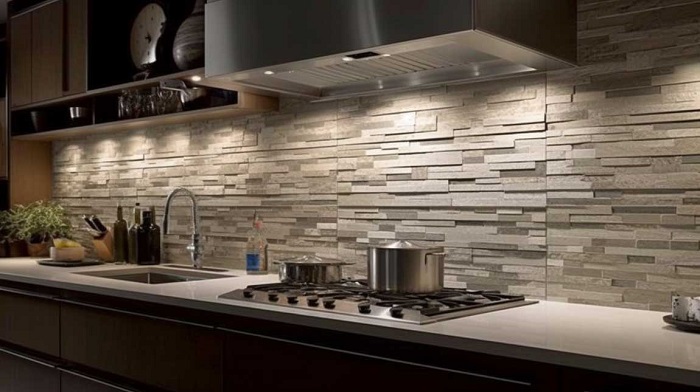
Kitchen wall finishes must withstand moisture, temperature fluctuations, greasy splashes, and frequent cleaning. This affects lighting, the visual size of the room, and the overall appearance of the cabinetry, appliances, and backsplash.
Before choosing materials, it’s important to assess risk areas: the area around the stove and sink, areas near the dining table, and areas where people frequently touch the kitchen. For a successful kitchen renovation Edmonton, it’s helpful to consider not only the appearance but also its practicality in advance: how easy is the coating to clean, whether it can be repaired locally, and how will it perform in a few years?
Key requirements for kitchen walls
- Moisture resistance: condensation and steam should not cause swelling, peeling, or mold.
- Wear resistance: Frequent scrubbing with a sponge and accidental impacts should not leave noticeable marks.
- Washable surface: the ability to clean grease and stains without damaging the coating.
- Safety: Low flammability and no pungent odor, especially near heat and open flames.
- Substrate compatibility: Concrete, plaster, and drywall require different preparatory solutions.
Which areas of the kitchen require different Coatings: backsplash, dining area, walkways
In the kitchen, walls experience different loads depending on the area: some areas are constantly exposed to splashes and steam, others are more concerned with comfort and acoustics, and in walkways, resistance to abrasion and accidental contact is paramount. Therefore, a one-size-fits-all coating “for the entire kitchen” often leads to either unnecessary expenses or rapid wear.
It’s more practical to divide the kitchen into functional areas and select finishes based on actual conditions: humidity, temperature, frequency of cleaning, and risk of mechanical damage. This creates a cohesive look and makes maintenance easier.
Zones and Suitable Surfaces
- Apron (work area near stove and sink)
- Traffic: grease, splashes, steam, temperature changes, frequent cleaning.
- Suitable: ceramic tiles, porcelain stoneware, tempered glass, compact laminate/HPL plastic, stainless steel, and water-resistant washable paint, provided the substrate is perfectly prepared and regularly maintained.
- Avoid: paper wallpaper, untreated wood, textured porous surfaces that are difficult to clean.
- Dining area (wall near table)
- Traffic: spot contamination, contact with chair backs, possible children’s “drawings.”
- Suitable: washable Matte paint, paintable vinyl/non-woven wallpaper, decorative plaster with a protective coating, wall panels up to the level of the chair backs (as a “plinth”).
- Tip: in the chair area, a more durable finish or a combination of materials at a height of 90-120 cm is appropriate.
- Passageways and “transport” areas (at the entrance, along the furniture, near the refrigerator)
- Traffic load: abrasion, impacts from bags and doors, fingerprints, frequent cleaning.
- Suitable: wear-resistant washable paint, vandal-proof wallpaper, panels (MDF/PVC/HPL) at the bottom of the wall, coverings that can be easily restored (repainted).
- Tip: choose matte or semi-matte surfaces – fingerprints and small marks are less visible on them. Scratches.
Bottom line: the backsplash requires the most practical and washable material, the dining area requires a balance of comfort and stain resistance, and the walkways require increased abrasion resistance and easy maintenance. Separating the finishes into zones helps preserve the kitchen’s appearance for a long time and simplifies daily maintenance.