
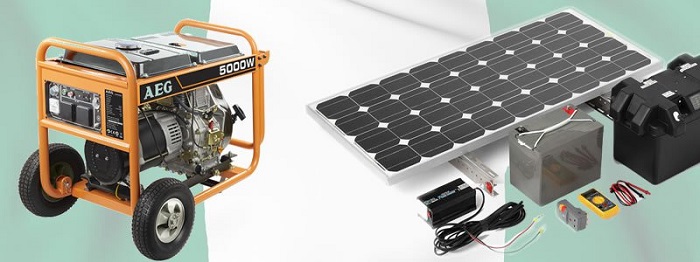
Outage planning used to mean one familiar question: portable generator or standby generator? Solar batteries have changed that conversation. Now a homeowner can choose quiet stored electricity, fuel-based backup, or a hybrid design that uses both.
Neither option wins every time. A solar battery backup stores electricity and can power selected home circuits without fuel, exhaust, or engine noise. A generator creates electricity from fuel and can run for long periods if fuel is available and maintenance is handled.
Where a Battery Feels Better
Solar batteries are strongest when outages are short, frequent, or paired with solar panels. They switch quietly, require little day-to-day attention, and can also work during normal grid operation by storing daytime solar for evening use. That means the hardware is useful even when the grid is fine.
The Department of Energy says storage helps solar contribute to electricity supply when the sun is not shining. For a home with panels, the battery can turn noon production into evening power and provide some resilience during grid interruptions.
A solar battery backup solution makes the most sense when the homeowner wants a cleaner, quieter setup for essential loads. ESYsunhome’s home solution page also shows battery storage alongside solar, EV charging, and generator integration, which is a useful reminder that backup design does not have to be either-or.
Where a Generator Still Has a Role
Generators can be practical for long outages, high heating or cooling loads, and rural locations where fuel storage is normal. A large standby generator can support bigger loads than many residential batteries, especially if the outage lasts several cloudy days.
The trade-offs are familiar: noise, exhaust, fuel logistics, exercise cycles, oil changes, and placement rules. Portable generators also require careful operation to avoid carbon monoxide danger and unsafe backfeeding. Standby generators are more convenient but add installation cost and maintenance.
For some homes, the ideal setup is a battery for instant, quiet backup and a generator for extended events. The battery can cover normal short outages while the generator becomes a second layer when weather, wildfire, or grid damage stretches longer.
Compare by Outage Type
The better choice depends on the outage being planned for:
· Short evening outage: battery usually feels easier
· Multi-day storm with low solar: generator or hybrid system may help
· Frequent utility interruptions: battery can reduce disruption with little noise
· Remote property: generator, storage, and solar may all be needed
· High-power appliances: check inverter rating before assuming battery coverage
Battery sizing also has to account for starting loads. Pumps, compressors, and HVAC equipment can briefly draw more power than their running wattage. A quote should identify which circuits are backed up, not just the total kWh of storage.
Runtime Is Not One Simple Number
A generator’s runtime depends on fuel supply and load. A battery’s runtime depends on usable capacity, load size, state of charge, and solar recharge. A 10 kWh battery might run small essentials for many hours but drain quickly under electric heating, air conditioning, or EV charging.
That is why a backup plan should begin with priorities. Keep the food cold, lights on, internet working, and safety systems powered first. Add comfort loads only when the budget and system rating support them.
For many homeowners, batteries are no longer just a green upgrade. They are a quieter way to handle the outages that actually happen most often. Generators remain useful for longer events, but the strongest backup designs choose the tool based on the load, the outage length, and the homeowner’s tolerance for fuel and maintenance.